Bit Breakdown: Part 1
Anatomy
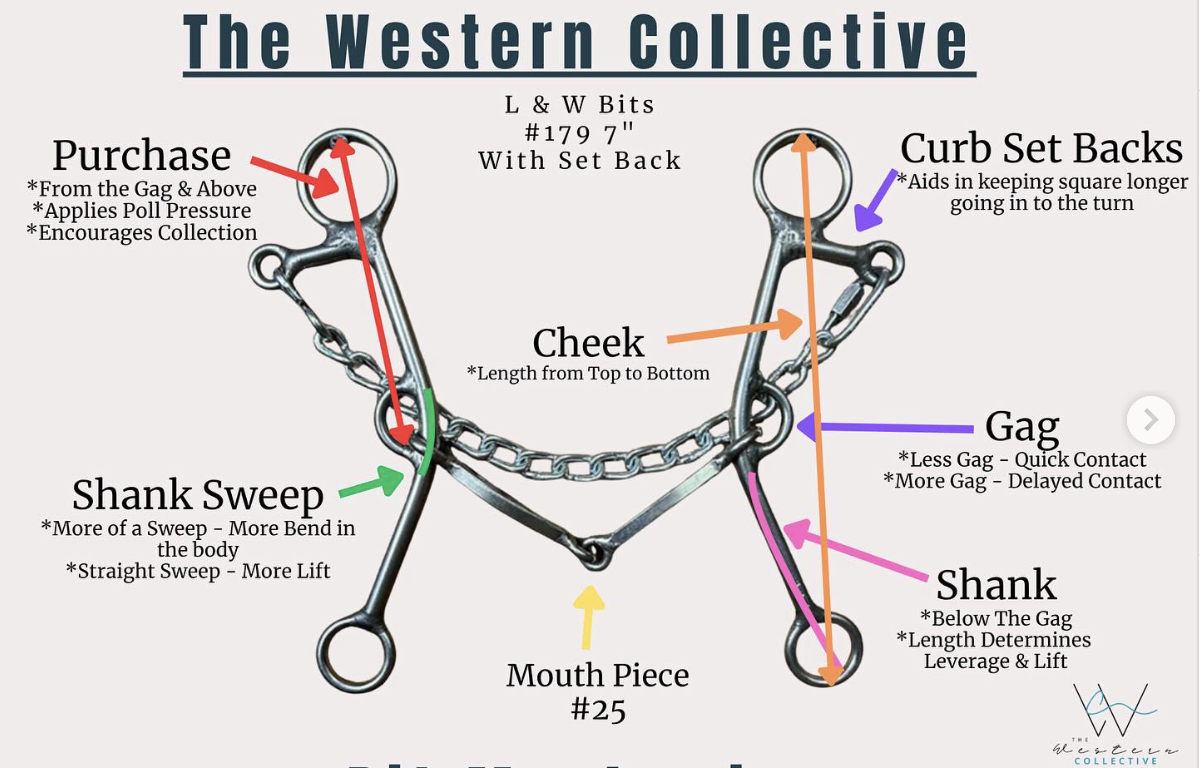
The Cheek, Made up of:
The Shank
The portion of the curb bit extending below the mouthpiece, attaching to the reins. It’s the lever that turns hand pressure into mechanical action.
Shank length:
Longer shanks = greater leverage, more stopping power, a “finished” feel, but slower reaction (more warning before impact)
Shorter shanks = quicker, sharper response, less mechanical amplification
Shank sweep (curve):
Curved or sweeping designs slow down action (more gradual cues).
Straighter shanks produce faster engagement and more direct communication.
Summary: Shank style directly affects reaction timing and severity; straight and short equals direct and fast; long and curved allows gradual, subtle control.
3. The Purchase (Upper Shank)
The upper arm extending above the mouthpiece to the headstall attachment.
Longer purchase:
Raising the curb-straps higher on the jaw
More poll pressure and vertical flexion; encourages head drop and shoulder roll
Shorter purchase:
Reduces poll lift, speeds reaction, more immediate mouth-based effect
Purchase:Shank Ratio (Leverage & Timing)
Bit leverage is a mechanical ratio: more lower shank length relative to purchase increases force at the mouth.
For example:
A 1:3 shank/purchase ratio means 1 lbf of rein pull ≈ 3 lb on horse’s bars/mouth
Longer lower shanks = greater pre-signal, giving well-trained horses the ability to respond softly; ideal for refined cues
Short lower shanks = quicker onset, less warning
4. Curb
Strap
This connects under the horse’s chin and activates after the bit begins to rotate, reinforcing the signal by adding pressure to the chin groove.
Tighter strap = quicker signal, less room to respond
Looser strap = slower signal, more forgiveness
Proper fit is usually two fingers between the strap and chin. Too tight, and it hits before the mouthpiece does; too loose, and it won’t reinforce the bit at all. Materials matter:
Leather = soft, forgiving
Chain = quicker, more defined
Hybrid = popular for adjustability
The strap works with the shank and purchase to shape how, and when, the horse feels your hands.
Setback Curb
A setback curb allows for an even quicker response.
5. The Mouthpiece
This is where feel meets function. It’s the part that goes inside the horse’s mouth and communicates your cues through the tongue, bars, lips, and palate.
Basic Rules:
Thicker = milder (pressure spread out)
Thinner = more precise (but harsher if misused)
More joints = more bend (ideal for stiff horses)
Fewer joints = more stability (ideal for over-bendy horses)
Some horses want flexibility. Others need boundaries. Some want tongue relief. Others hate ports. When you know what you’re trying to fix (too much bend, not enough bend, heavy on the front, bracing in the ribcage) you can choose the bit accordingly.
Why It Matters to the Barrel Racer
Timing & feel: a smooth rider-horse partnership relies on pre-signal and clarity, not power.
Training stages:
Beginners or young horses often use shorter, straighter shanks for clarity.
More advanced horses can handle longer or curved shanks that permit finer, more subtle driving and releases
Personal fit: even subtle differences like head shape or neck length can shift which ratio feels natural for the horse
Pro Insights
Troy Flaharty:
His “Betty” cheek has an equal shank-to-purchase ratio, balanced for steady timing and lift
Notes that American-made steel, finish, and weight all affect the feel of the bit, even before mechanics
Sharin Hall: longer purchase encourages shoulder roll and poll flexion, ideal for collection and engine setup
Justin Briggs & Ivy Saebens: stress “know your own style and hand”, choose a bit that you can use softly under pressure without overcutting with it
Example of this is Tricia Aldridge and Adios. She works him in a shanked bit, but runs in an o ring!
Key Takeaways
Component Effect What It Means
Shank Length More/less leverage Longer = subtler, slower; shorter = sharper, immediate
Shank Sweep Curve affects timing Curved = forgiving, slower; straight = fast signal
Purchase Length Poll vs. mouth pressure Longer = more lift; shorter = more direct
Purchase:Shank Ratio Leverage ratio Higher ratio = softer cues at distance
Curb Strap Fit Engagement timing Loose = warning mode; tight = immediate impact
This post lays the foundation for understanding how bits translate human intentions into mechanical signals on a horse’s body. Next up: Part 2— Mouthpiece Mechanics, where we’ll dissect solid, jointed, ported, twisted wire, and more mouthpiece types in detail.
Bit Breakdown: The Anatomy of a Bit
BarrelRacing.com
https://barrelracing.com/gear/bit-breakdown-the-anatomy-of-a-bit-barrel-racing-bits/
— Primary source for definitions of shank, purchase, mouthpiece, and curb strap; also covers leverage ratios and timing mechanics.Bit Breakdown, Part 2: Gag Bits, Combos, and Training Tools
BarrelRacing.com
https://barrelracing.com/gear/bit-breakdown-part-2-gag-bits-combos-and-training-tools/
— Discusses bit function within a training context, explains pressure points, and includes commentary on shank/purchase influence.A Bit of Knowledge
Barrel Horse News
https://barrelhorsenews.com/barrel-racing-articles/tack-equipment/a-bit-of-knowledge/
— Provides pro opinions from Ivy Saebens and Justin Briggs, especially on bit selection relative to hand pressure and riding style.Form, Bit, and Function: How to Choose and Use the Right Headgear
BarrelRacingTips.com
https://www.barrelracingtips.com/form-bit-and-function-how-to-choose-and-use-the-right-headgear-for-your-barrel-horse/
— Offers insight on training stage progression, how bit mechanics interact with training goals, and matching the bit to the rider.Form, Function & Communication: Dave Elliott Interview
BarrelRacingTips.com
https://www.barrelracingtips.com/form-function-communication-with-barrel-horse-bitting-expert-dave-elliott/
— Source for anatomical explanations of how bit components affect the tongue, bars, palate, lips, and poll.Danyelle Campbell on Barrel Racing Bits
BestEverPads.com
https://www.besteverpads.com/danyelle-campbell-on-barrel-racing-bits/
— Useful for her take on bit progression, selecting for control vs. freedom, and foundational balance between feel and power.